


Sign up for the latest COBA Flooring news.


When entrance flooring is specified correctly, most people never notice it. Floors stay cleaner, maintenance teams spend less time managing tracked-in dirt and moisture, and entrances continue performing long after installation.
When it is specified badly, however, the problems become visible very quickly.
Worn entrance areas, difficult maintenance routines, damaged flooring finishes and poorly performing matting systems can all create unnecessary costs for facilities teams and contractors alike. In busy commercial buildings, replacing a full entrance matting installation can also become disruptive and expensive.
This is one reason why many architects, contractors and facilities managers are increasingly specifying modular entrance matting tiles for commercial entrances.
Unlike fixed roll matting or fully integrated entrance systems, entrance matting tiles provide greater flexibility for installation, refurbishment and ongoing maintenance without compromising dirt and moisture control performance.
Commercial entrances rarely experience consistent traffic patterns throughout their lifetime.
A university building may see heavy seasonal footfall. Retail entrances face constant pedestrian traffic during peak shopping periods. Public buildings and transport environments often need flooring systems that can be maintained without disrupting visitors or building operations.
Modular entrance matting tiles help solve this problem because individual sections can be replaced, reconfigured or refurbished without removing the full entrance flooring system.
For contractors, this simplifies future maintenance work. For facilities managers, it helps reduce disruption and long-term replacement costs. For architects, it provides greater flexibility when designing recessed entrance layouts and specifying products for different traffic conditions.
You can explore broader entrance system planning considerations in our guide to entrance matting systems:
Guide to Entrance Matting
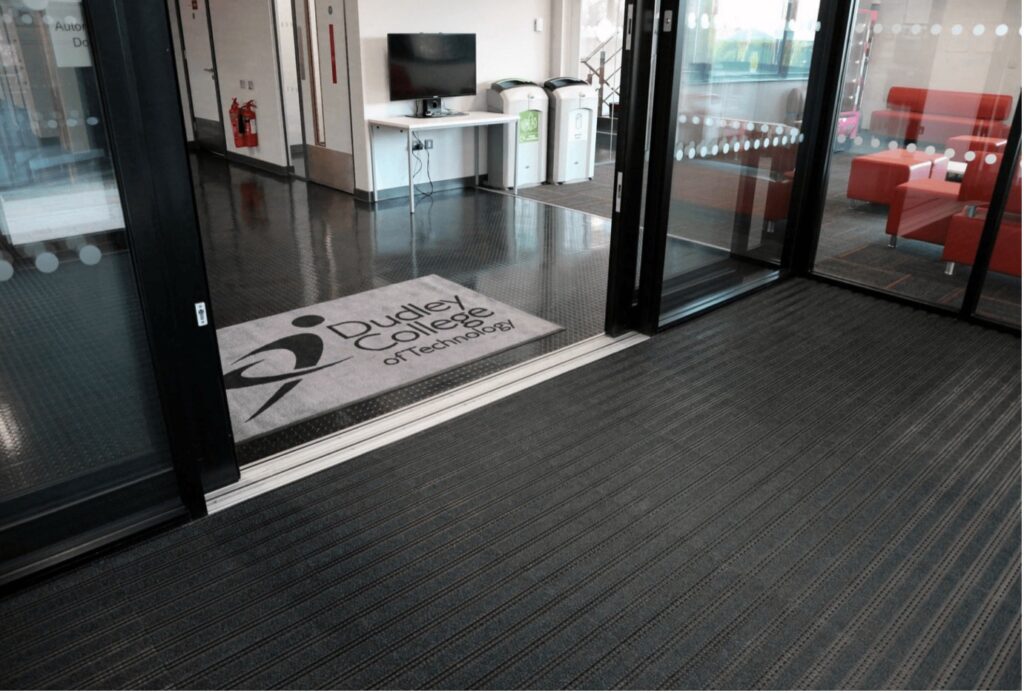
Education environments place constant pressure on entrance flooring systems.
Schools, colleges and universities experience concentrated pedestrian traffic throughout the day, particularly during lesson changes, wet weather and seasonal periods. Entrance flooring must deal with dirt, moisture and heavy wear while remaining safe and easy to maintain.
This is where modular entrance matting tiles are particularly effective.
Instead of replacing an entire entrance matting installation when certain sections become worn, individual tiles can be removed and replaced during planned maintenance periods or school holidays.
For estates and facilities teams, this creates a far more manageable long-term maintenance strategy.
For architects specifying education projects, modular entrance flooring also provides flexibility when designing recessed matwells and high-traffic internal walk-off zones.
Check out our guide on specifying entrance matting In an education environment:
How to Specify Entrance Matting for Education
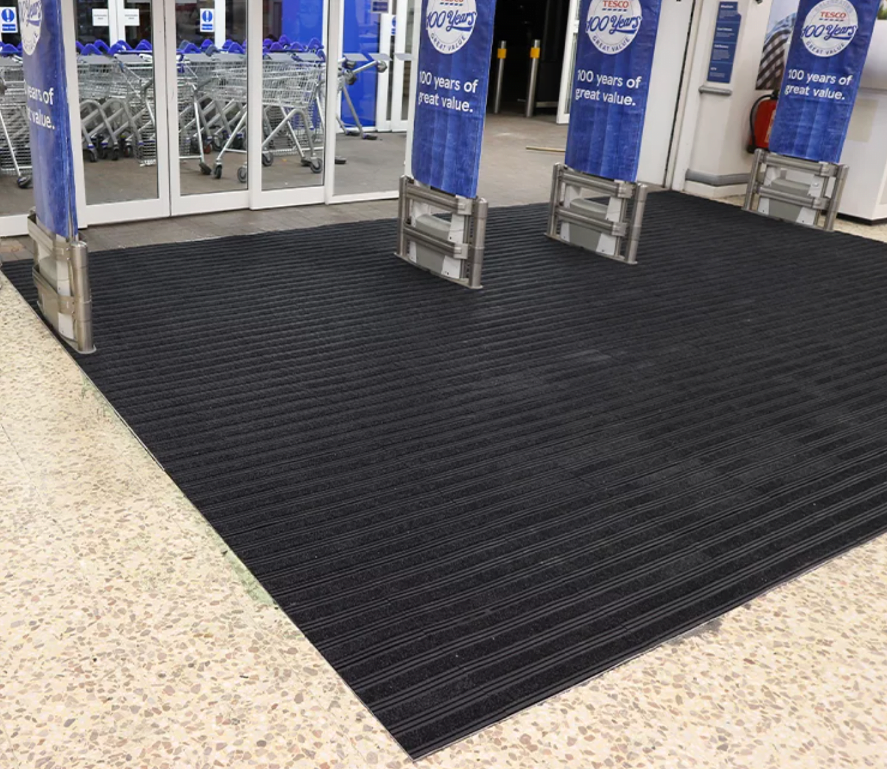
Retail entrances work harder than most flooring areas within a building.
Constant footfall, changing weather conditions and the need to maintain presentation standards place significant demands on entrance flooring systems. Worn or poorly performing entrances can quickly affect the appearance of the wider retail environment.
Modular entrance matting tiles help retailers maintain cleaner, more professional-looking entrances while simplifying future maintenance.
Damaged sections can be replaced individually, allowing entrances to remain visually consistent without the cost and disruption of replacing the full flooring installation.
This flexibility is particularly valuable in shopping centres, supermarkets and busy retail units where downtime needs to be kept to a minimum.
Modern office entrances are expected to balance performance with presentation.
Architects and designers are increasingly looking for entrance flooring solutions that control dirt and moisture while complementing surrounding finishes and maintaining a clean, integrated appearance.
Modular entrance matting tiles provide flexibility here because they can be configured to suit different recessed entrance layouts while supporting a wide range of insert colours and surface finishes.
For contractors, installation flexibility can also simplify projects where matwell dimensions or entrance layouts are more complex.
For facilities managers, the ability to replace individual sections without disturbing the wider entrance area can significantly reduce maintenance disruption over time.
In healthcare environments, entrance flooring is not simply about appearance.
Hospitals and healthcare buildings require entrance systems that can cope with continuous pedestrian traffic, wheeled equipment and strict maintenance routines. Flooring downtime can quickly become operationally disruptive.
Modular entrance matting tiles help simplify maintenance because worn or damaged sections can be replaced independently without removing the entire entrance flooring system.
This approach supports cleaner entrances, improved maintenance efficiency and better long-term lifecycle management for busy healthcare facilities.
Barrier matting also plays an important role in reducing the spread of dirt and moisture throughout healthcare buildings:
What is Barrier Matting?
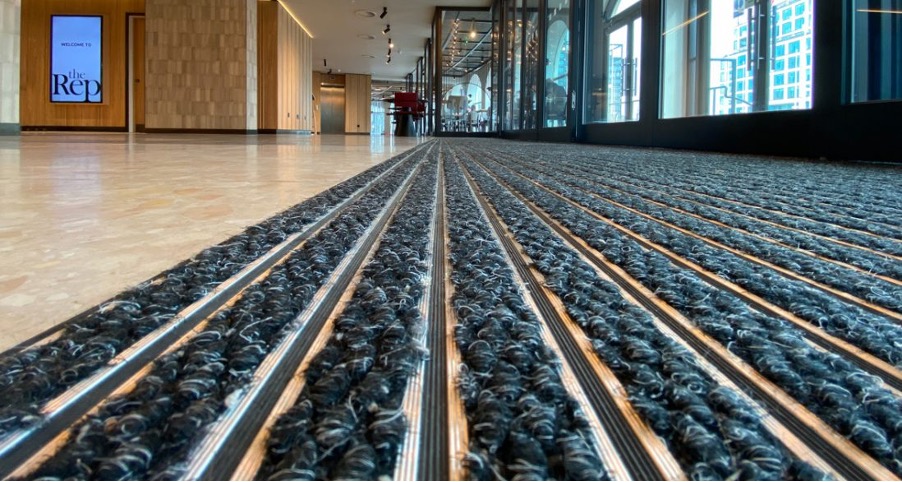
Libraries, civic buildings, leisure centres and public venues often experience highly variable traffic levels throughout the year.
Entrance flooring in these environments must remain durable while supporting long-term maintenance and refurbishment planning.
Modular entrance matting systems provide flexibility because sections can be replaced gradually as wear patterns develop rather than requiring complete entrance refurbishment in one stage.
This phased maintenance approach can help reduce long-term flooring costs while extending the lifespan of surrounding floor finishes.
Does Your Entrance Stand Up to Legal Scrutiny?
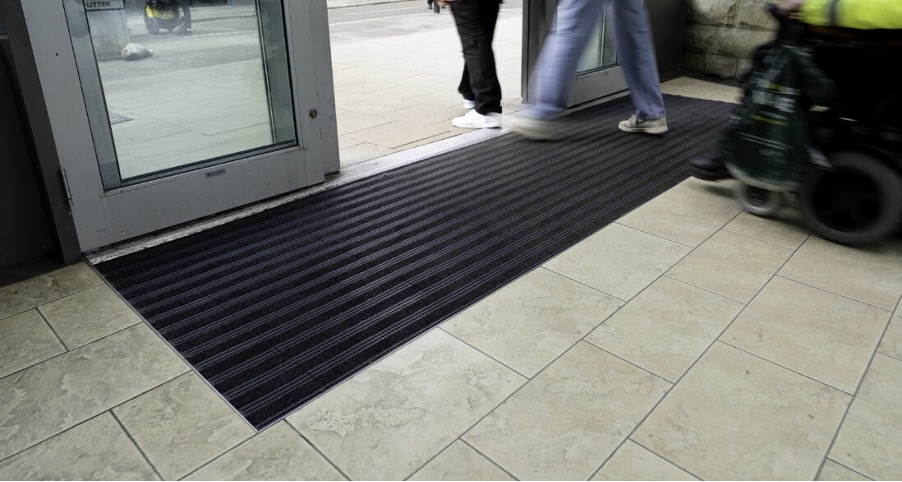
Transport environments rarely stop moving.
Rail stations, airports and other busy public entrances place exceptional pressure on entrance flooring systems due to constant pedestrian traffic, wheeled luggage and exposure to external contaminants.
In these environments, modular entrance tiles offer an important advantage: maintainability.
Instead of closing large entrance areas for complete flooring replacement, individual sections can be refurbished or replaced as needed while maintaining operational continuity.
For contractors and facilities teams working in transport environments, this flexibility can significantly simplify long-term entrance maintenance planning.
Many entrance flooring decisions are made around installation costs alone.
However, in commercial buildings, the long-term success of an entrance flooring system is often determined by how easy it is to maintain, adapt and refurbish over time.
This is where modular entrance matting tiles continue to offer advantages across a wide range of commercial environments.
By combining effective dirt and moisture control with easier replacement and refurbishment, modular entrance flooring can help support cleaner entrances, lower maintenance disruption and longer-lasting flooring performance.
Explore COBA Flooring’s range of modular entrance matting tiles.
Get the latest floor safety articles, product updates and offers.