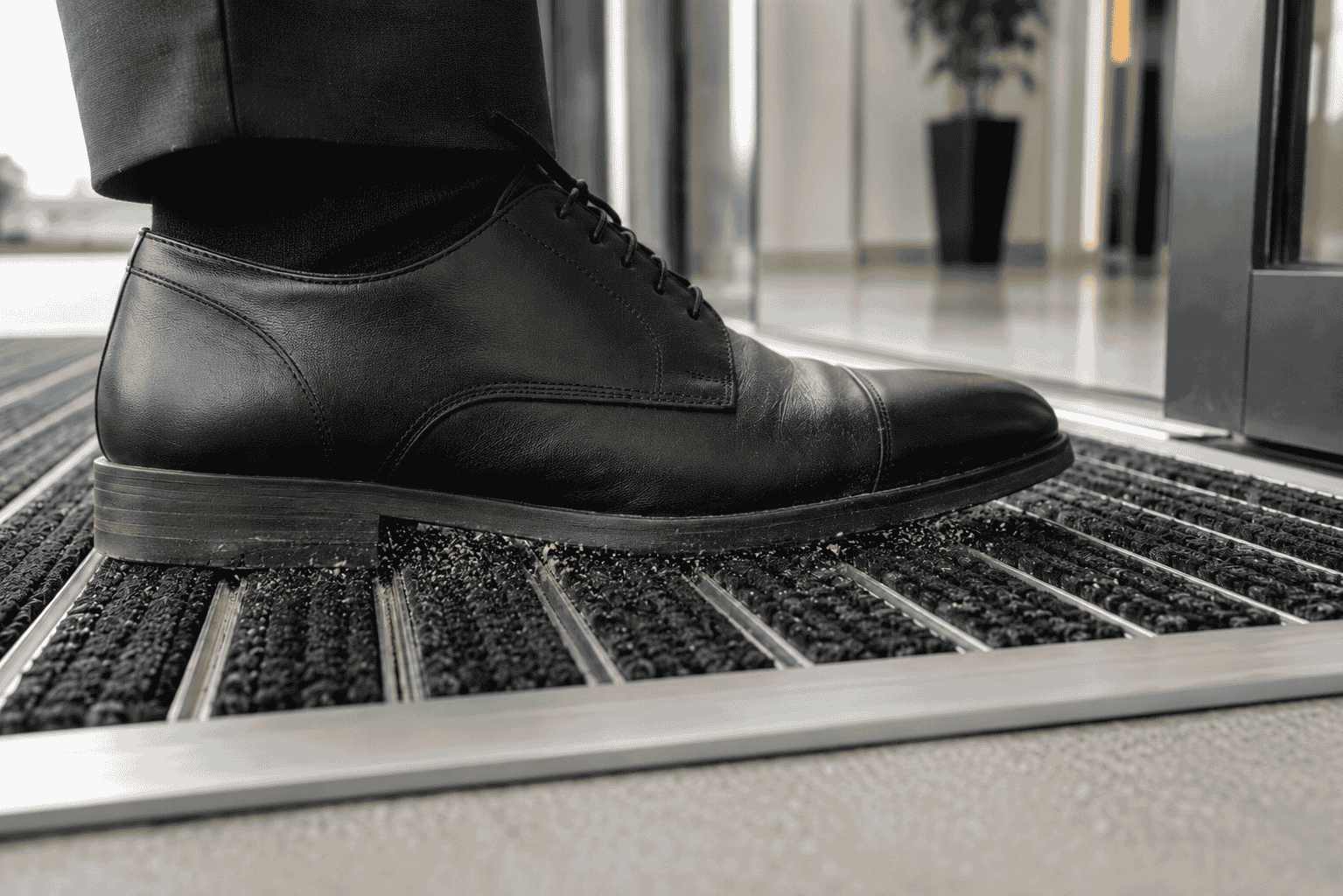
In South Africa, entrance matting is not only about wet weather. For many shopping centres, office parks and industrial facilities, the daily challenge is dust, grit and dry debris entering from parking areas, pathways, landscaped spaces and surrounding roads.
Once inside, these particles are carried through reception areas, corridors and shared spaces. This increases cleaning pressure, affects the appearance of the building and gradually wears down internal flooring.
Dust may enter at the door, but its operational impact can spread throughout the building.
Your Cleaning Team Should Not Be the First Defense.
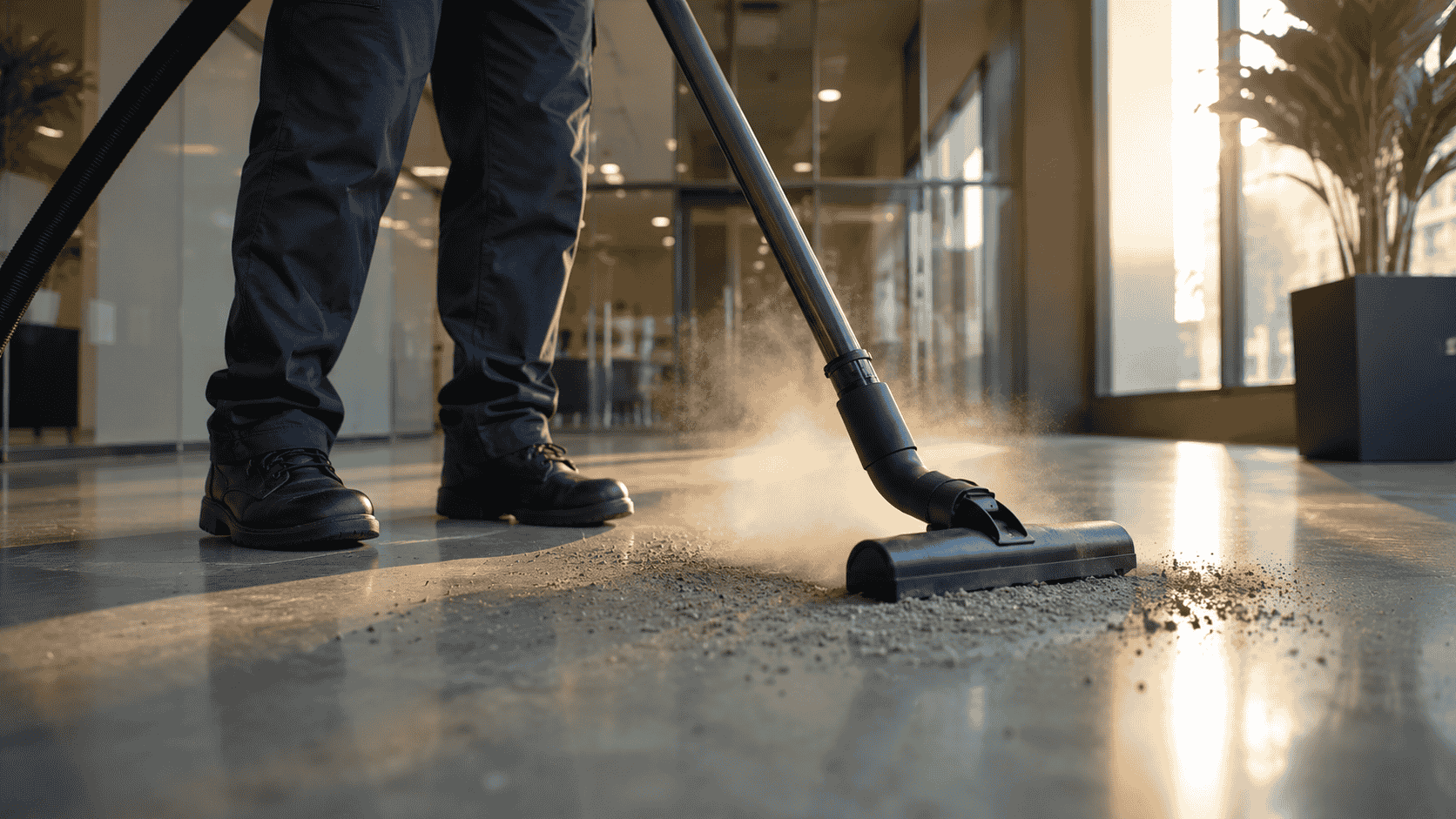
Cleaning teams can remove dust after it enters, but they cannot prevent a continuous flow of debris through the doorway.
Poor dust control can contribute to:
- More frequent sweeping and vacuuming
- Increased pressure on cleaning teams
- Visible dust across reception areas
- Abrasive wear on internal flooring
- Higher long term maintenance demands
The more effective approach is to remove as much debris as possible before it travels further into the building.
That begins with choosing entrance matting for the actual conditions outside the entrance.
Stop the Heaviest Debris Outside
The first opportunity to control dust is before people cross the threshold.
Effective exterior entrance matting should provide strong scraping action to help remove loose soil, grit and dry debris from footwear.
This is particularly important for entrances exposed to:
- Unpaved or dusty parking areas
- Industrial yards
- Landscaped surroundings
- Construction activity
- Windblown Highveld dust
- Heavy pedestrian traffic
An exterior solution such as Super Scraper® can help brush debris from footwear before it reaches internal flooring.
The objective is simple: stop the heaviest dirt at the earliest possible point.
One Step Is Rarely Enough
A small mat may only receive one step from each visitor. That provides very little opportunity to clean both shoes effectively.
Commercial barrier matting should provide enough usable surface for several footsteps. ISSA recommends the “Rule of 15s” for commercial entrances: approximately five feet of scraper matting, five feet of scraper-wiper matting and five feet of wiper matting. Together, these zones provide more opportunity to remove soil and moisture from footwear before it spreads further into the building. With each step, more dirt can be removed and retained before the visitor reaches the surrounding floor.
For high footfall buildings, systems such as Plan.a™ Entrance Matting can be configured to suit the entrance, expected traffic and required surface action.
The question is not simply whether a building has a mat.
The question is whether people take enough steps across it for the matting to work.
Dust Has Momentum
Dry debris rarely remains near the doorway.
Foot traffic, trolleys and deliveries can carry it deeper into the building. This is why internal matting remains important after the initial exterior scraping action.
Quality carpet entrance matting helps capture finer particles that remain on footwear.
A solution such as Berber Point Entrance Matting can support dirt control in commercial walkways, receptions and recessed entrance areas.
The exterior surface removes the heavier debris.
The internal walk-off surface captures what remains.
The Cheapest Mat Can Become an Expensive Decision
Entrance matting is sometimes selected according to the size of the doorway or the lowest available price.
This can result in matting that is too short, too lightweight or unsuitable for the surrounding environment.
A better specification considers:
- The type and volume of dust entering the building
- Expected pedestrian and trolley traffic
- Exterior ground conditions
- The amount of available entrance space
- The flooring that needs protection
- How the matting will be cleaned and maintained
A busy shopping centre does not face the same conditions as a small office reception. An industrial entrance beside an open yard requires a different approach from a corporate lobby.
The matting should match the environment, not simply the doorway.
The Best Dust Is the Dust That Never Gets Inside
South African buildings cannot eliminate dust from the surrounding environment, but they can control how much of it enters.
The most effective approach is to:
- Scrape larger debris outside
- Interrupt dirt transfer at the entrance
- Capture finer dust before it spreads inside
When the right matting is selected, the entrance becomes part of the building’s maintenance strategy.
Cleaning pressure can be reduced, internal flooring receives greater protection, and the building remains presentable for longer.